LinkedIn Crossclimb

Climb a ladder of words, one letter at a time.

4–10 minutesBy LinkedIn
linkedin.com/games/crossclimb
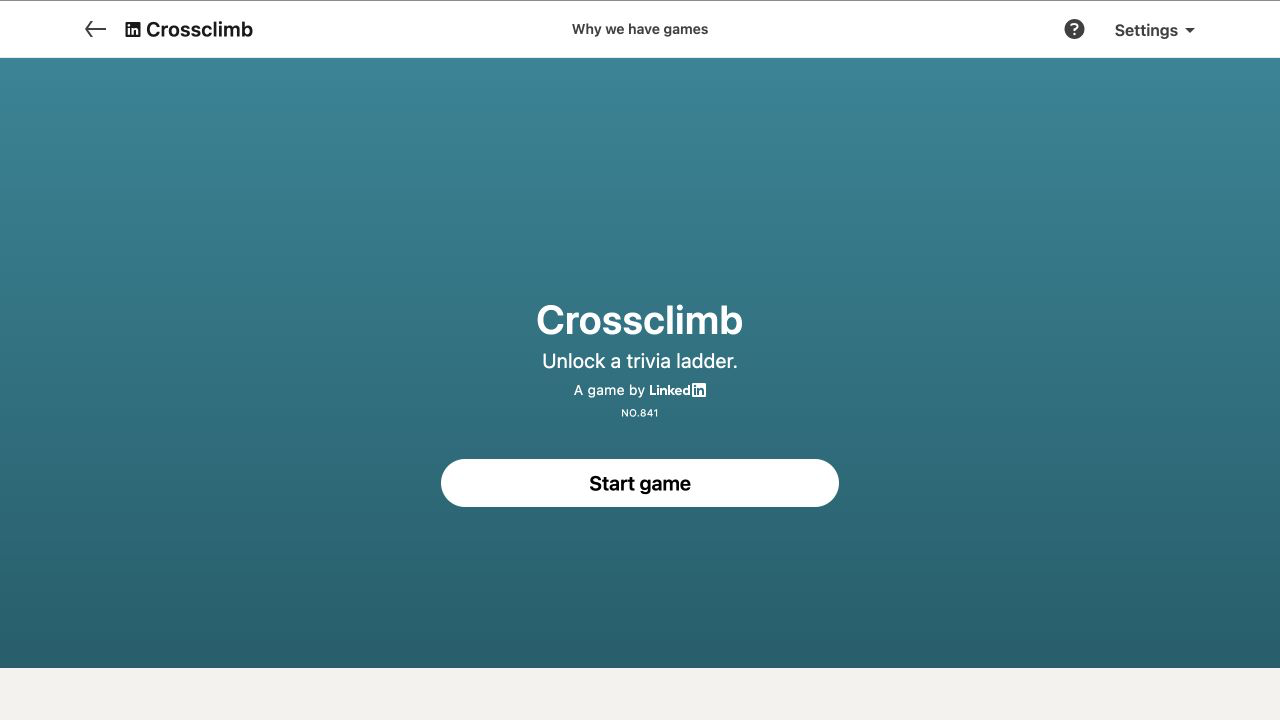
LinkedIn Crossclimb official start screen
Official LinkedIn Games start screen, captured August 2026.

What is Crossclimb?

Platform
Web
Access
Official LinkedIn link
Schedule
Daily at midnight PT
Session
4–10 minutes

Crossclimb is a daily word ladder: solve clues to fill a stack of words where each differs from its neighbour by a single letter, then order them and crack the final top-and-bottom answer. A clever twist on the classic word ladder.

LinkedIn Crossclimb combines short trivia-style clues with a classic word ladder. First you solve a group of same-length middle words. Then you arrange those answers so each neighbouring rung differs by exactly one letter. A correct middle ladder unlocks clues for the top and bottom words, which must continue the same one-letter chain. The timer matters, but the real challenge is switching cleanly between clue solving and letter-pattern analysis.

A useful Crossclimb strategy does not require solving every clue in order. Specific clues create anchors, partial answers reveal letter patterns, and the ladder itself can correct uncertain vocabulary. LinkedIn offers hints, row reveals, Auto-check, and optional Auto-reorder, but you can solve most boards by treating clue meaning and word structure as two sources of evidence. This guide stays spoiler-free and explains how to play Crossclimb without publishing today’s answers.

Core rules

  1. 1Solve each short clue to build a set of same-length words.
  2. 2Order the words so neighbouring answers differ by one letter.
  3. 3Use the completed ladder to solve the final top and bottom clues.

Crossclimb strategy guide

Solve the clue set, arrange one-letter transformations, and unlock the final words with a methodical Crossclimb workflow.

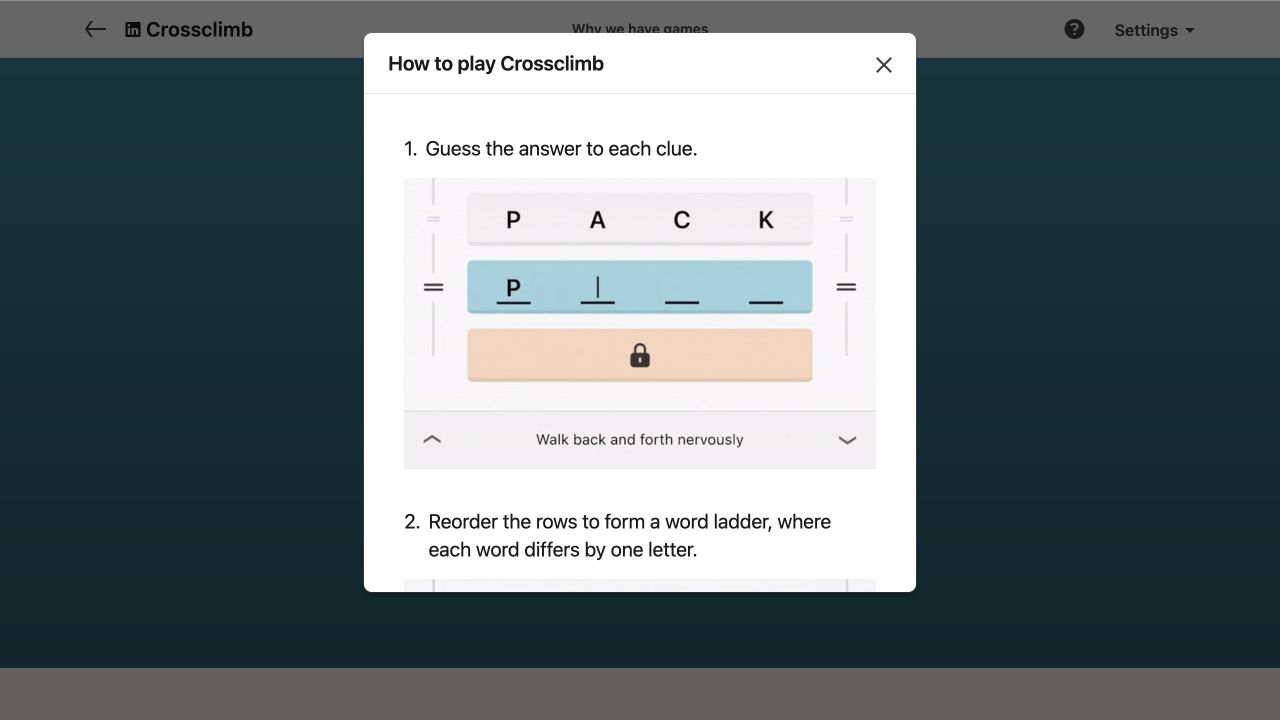
The official tutorial image shows the real game interface and an example puzzle, without revealing today's solution.

LinkedIn Crossclimb official tutorial showing the real game board
Official LinkedIn gameplay tutorial
1

Solve high-confidence clues first

Read every middle clue before committing much time to the first one. Proper names, precise definitions, common abbreviations, and unmistakable phrases are better anchors than broad clues with several synonyms. Enter the answers you know, then compare their letters. Even two confirmed words can reveal whether they are likely neighbours and which positions are changing across the ladder.

For uncertain clues, note the answer length and likely part of speech. A clue asking for an action probably expects a verb; a person or object usually expects a noun. Crossclimb answers must all share one length, so spelling matters. If a plausible answer is too long, look for a tighter synonym rather than forcing an abbreviation that the clue does not signal.
2

Turn the answer set into a graph

Compare each solved word with the others and count letter differences by position. Two words connect only when exactly one position changes; rearranging letters does not count. A word with only one possible neighbour probably belongs near an end of the middle set, while a word with two neighbours likely sits inside the chain. Thinking in connections removes much of the drag-and-drop trial and error.

If one answer connects to none of the others, revisit that clue first. It is more likely to be a wrong synonym or spelling than evidence that every other answer is incorrect. Sometimes the intended answer becomes obvious from the letter pattern: if a rung must sit between COLD and CARD, the unknown word needs to be one letter from each. The structure can narrow a vague clue to a single candidate.

3

Arrange the middle ladder efficiently

Begin with a low-degree word—one that has only a single valid neighbour—and build outward. Check every adjacent pair after moving a rung. A ladder can look smooth while hiding one two-letter jump, and that single mismatch prevents the final clues from unlocking. If Auto-reorder is enabled, correct middle answers may arrange automatically, but manual comparison is valuable practice and helps expose a bad entry sooner.

Do not assume the semantic order of clues matches the ladder order. The clue list is a set to solve, not a narrative sequence. Also remember that repeated letters occupy positions: changing BOOK to BOOT changes only the final letter, but an anagram with the same letters may differ in several positions. Read rungs left to right and mark the exact coordinate of each change.

4

Use the unlocked endpoints

Once the middle sequence is correct, the top and bottom clues become available. Each endpoint must differ by one letter from its adjacent middle rung, which makes these final clues more constrained than they first appear. Solve the clue and transformation together. If the top neighbour is RATE and the clue suggests a unit of speed, the ladder condition may distinguish the intended synonym immediately.

If an endpoint answer fits the clue but not the letter rule, it is not finished. Check inflections, singular versus plural, and alternate spellings. The top and bottom are part of the same ladder, not bonus trivia placed outside it. Completing both confirms the entire chain and turns a collection of independent answers into one coherent puzzle.

5

Use assistance as diagnosis

A Crossclimb hint reveals a letter, while Reveal row exposes a whole answer. Use the smallest intervention that addresses the actual block. If you know the clue but cannot order the ladder, another letter will not help; compare connections instead. If a single ambiguous clue prevents every chain, one revealed letter can be enough to recover the intended word without surrendering the row.

LinkedIn’s score share can show solve time, the order in which the ladder was filled, and no-mistake or no-hint labels. Beginners may also receive pre-filled rungs. New boards arrive at midnight Pacific Time. To improve, track whether time is lost on trivia, spelling, or ordering, then practice that stage rather than treating every slow solve as the same problem.

Common mistakes to avoid

These are rule misunderstandings and decision habits that create most avoidable errors.

Changing more than one position

Neighbouring words must differ by exactly one letter in the same position; anagrams and two-letter changes are not valid steps.

Forcing the first synonym

A clue may allow several words, but only one usually connects to the rest of the ladder cleanly.

Ordering by clue sequence

The displayed clues do not imply ladder order. Arrange the solved words by letter relationships.

Forgetting the endpoints

The unlocked top and bottom answers must also differ by one letter from their neighbouring middle rungs.

Crossclimb FAQ

Quick answers about rules, access, reset time, and score sharing.

What is LinkedIn Crossclimb?

Crossclimb is a timed trivia and word-ladder game. You solve same-length words, order them so adjacent rungs differ by one letter, then complete unlocked top and bottom clues.

Can letters move positions between Crossclimb rungs?

No. A valid step changes exactly one letter in place. The remaining letters stay in the same positions, so rearranging the word does not create a valid neighbour.

Why will the top and bottom clues not unlock?

At least one middle answer or rung position is still incorrect. Check that every adjacent pair differs in exactly one position and revisit any word with no valid neighbour.

What help does Crossclimb provide?

LinkedIn documents letter hints, full row reveals, Auto-check for entered words, and an Auto-reorder option that can arrange correct middle rungs.

What appears in a shared Crossclimb result?

The result can show completion time, the order in which the word ladder was filled, and whether the solve used mistakes or hints.

Try another puzzle

Ready to play Crossclimb?

Rules are checked against LinkedIn Help, and this guide never publishes today's clues, grid, path, or answer.

Spoiler-free by design